An Audiobook Story
what we listen to
· 4 min read
By all accounts, audiobook consumption has ’exploded’ in the past few years. If you’re a fan of audiobooks, you know that these days the number of books you can listen to is almost infinite. You also know that it’s the practical thing to do: running errands, exercising, doing mundane tasks - just put on an audiobook and get your reading time in. And the options are plenty: long fantasy series, historical fiction, all sorts of non-fiction (among many genres, but I’ll get to that later). In fact, the world’s biggest listening platform Audible claims to have more than 1 million audiobooks - so clearly audiobooks are more popular than ever. But what actually are they?
History of audiobooks #
The first audiobook was published in 1934, right around the time when recording tech started to be available. The first one included excerpts from the Bible, The Declaration of Independence, and Shakespeare’s plays - it was made for The Talking Book program, a new collaboration between The American Foundation for the Blind and the Library of Congress as a new form of reading matter that was accessible to blind people. Decades pass and audiobooks are mostly found in libraries and meant to be played on record playing devices. In the 80s, things got more serious: new casette technology made audiobooks more accessible than ever and this, along with the professionalization of the industry and new organization such as The Audio Publishers Association, made audiobooks a mainstream format.
The company behind Audible itself goes way back to ‘95, operating indepedently until it was purchased by amazon in 2008, giving rise to a platform that today takes up 65% of the audiobook market in the United States. While data for all 1 million of audiobooks is hard to come by, a dataset of 87,000 of them shows an interesting story. A big part of audiobooks is not just the author, but the narrator as well.
Audible narrators #
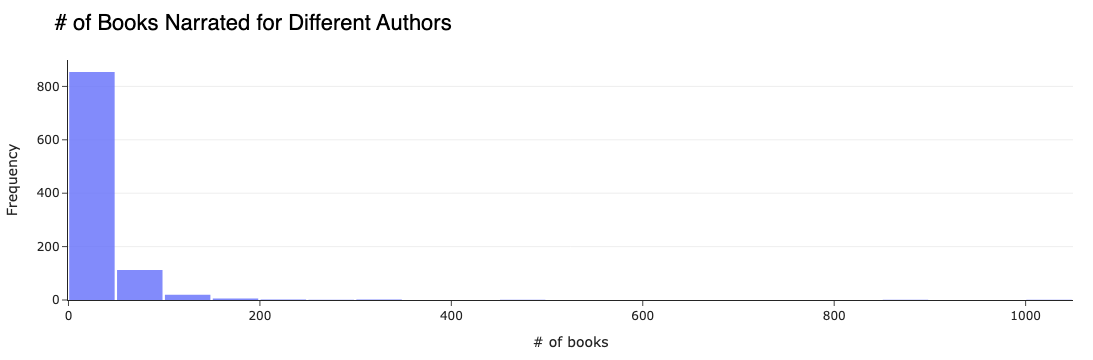
The Audible dataset included ~29,000 individual narrators, who on average have narrated 3. Most people, in fact, only narrate a handful of books, around 1-2. There are a few very prolific narrators too, including folks such as Davina Porter who started narrating audiobooks in 1986 and is now in the Audible Hall of Fame:
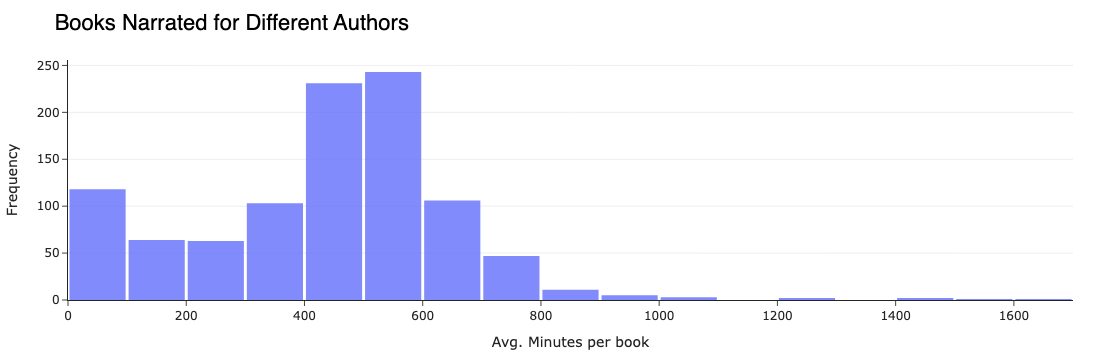
In terms of narration time, most narrators’ average book read time is around 6 hours. Here’s the spread:
There are many narrators who work on the Audible platform and audiobook recording is a complex process. A lot of the narrators are professional actors who are voice-trained to read through a book, sometimes guided by a team of production and editing. Or other times, from their home space. Narration involves some interesting choices: how do you convey headers? paragraph endings? do you make an attempt to interpret images? do you adopt certain accents? how do you ensure everything is pronounced correctly? Some audiobooks today are getting even more creative: the recently announced Harry Potter series audiobook will feature a cast of actors each playing one character in the story!
Comparisons to goodreads #
Goodreads data is another dataset that shows how people read and what is valued and more popular. Merging this onto the Audible narrators data, some interesting patterns appear. Goodreads and Audible ratings do not match up with each-other: goodreads ratings are consistently lower than audible ones:
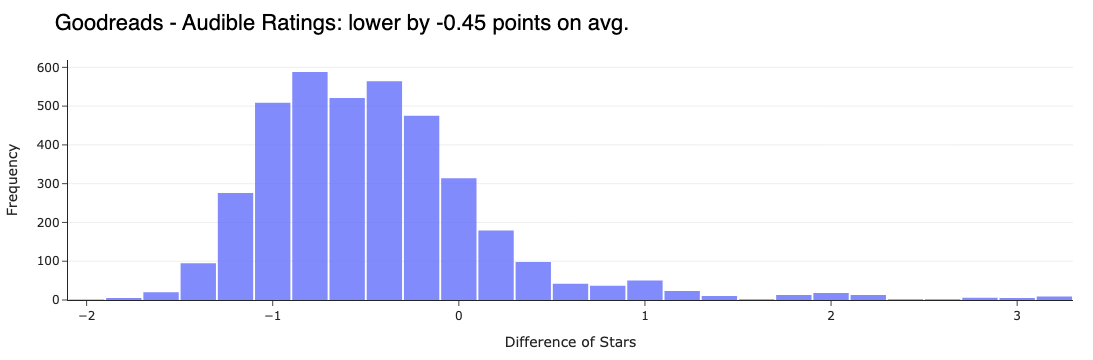
This could be because of many things, maybe people perceive books differently when narrated to them than when they read themselves, but it doesn’t seem like peole have researched this.
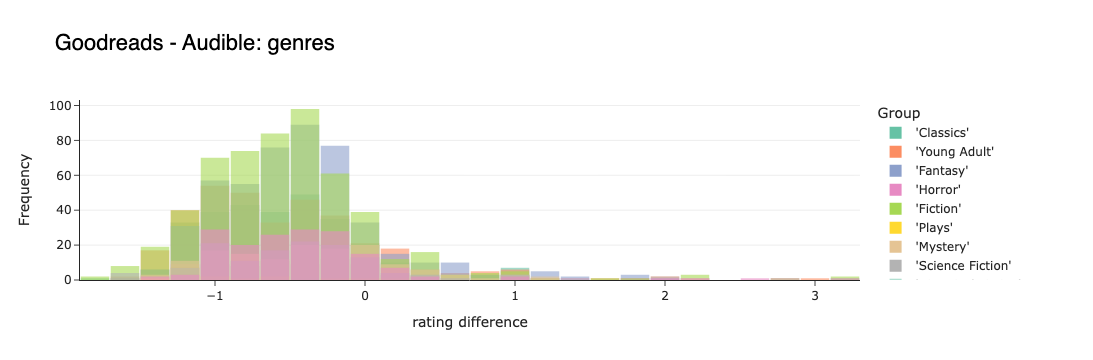
This pattern persists across genres as well - within different genres, audible books are rated higher than goodreads’ ratings:
Gender in Audible #
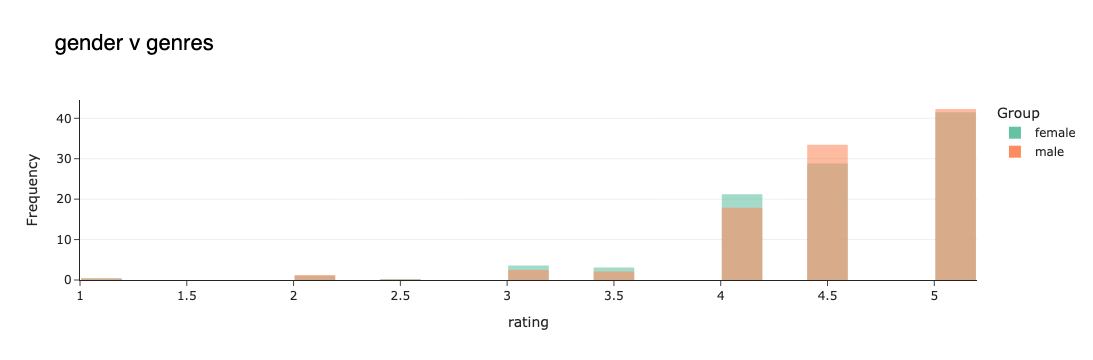
When I labelled narrators by gender (using name as a proxy), the results showed that male-narrated books have a slightly higher rating on average as well:
What audible genres rate the highest? #
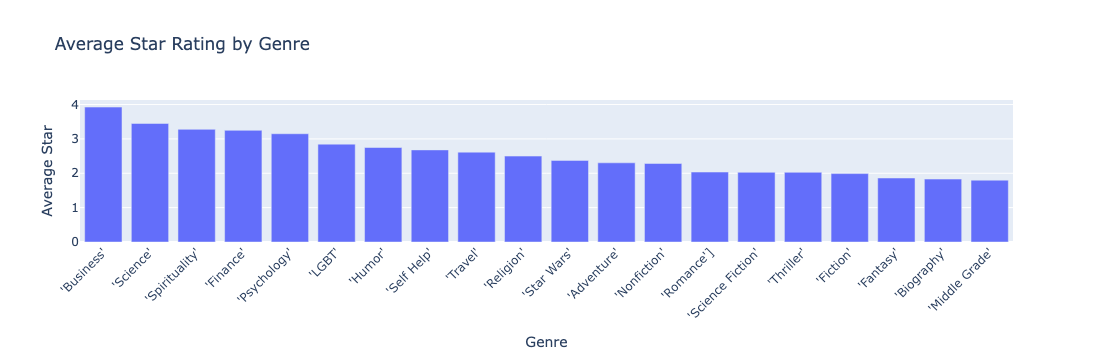
There are certain genres that score the highest average rating (around 3.9): business, science and spirituality are rated the highest, wheraeas fantasy and biography surprisingly score the lowest:
A changing approach to reading & new sound media #
The rise of all these audiobooks raises some interesting questions: what are the implications of listening instead of reading books? One argument is that providing audio-based reading format helps all forms of readers, not just those who learn best visually. For instance, audiobooks can be more immersive, making it easier to concentrate for e.g. ADHD students. But, what makes a good audiobook? There are professional juries that look into that: the Audies are the audiobook annual awards, given to the best audiobooks from the year across categories such as Audiobook of the Year, Fiction Narrator, awards for each genre (including for instance biography; this year’s winner was Barbra Streisand).
Given all these developments, audiobooks are a pretty exciting space to explore - as a reader/listener it’s interesting to see some of the patterns behind how people consume them.
Thanks for reading! -Dea